How a rocket launch impacts the atmosphere

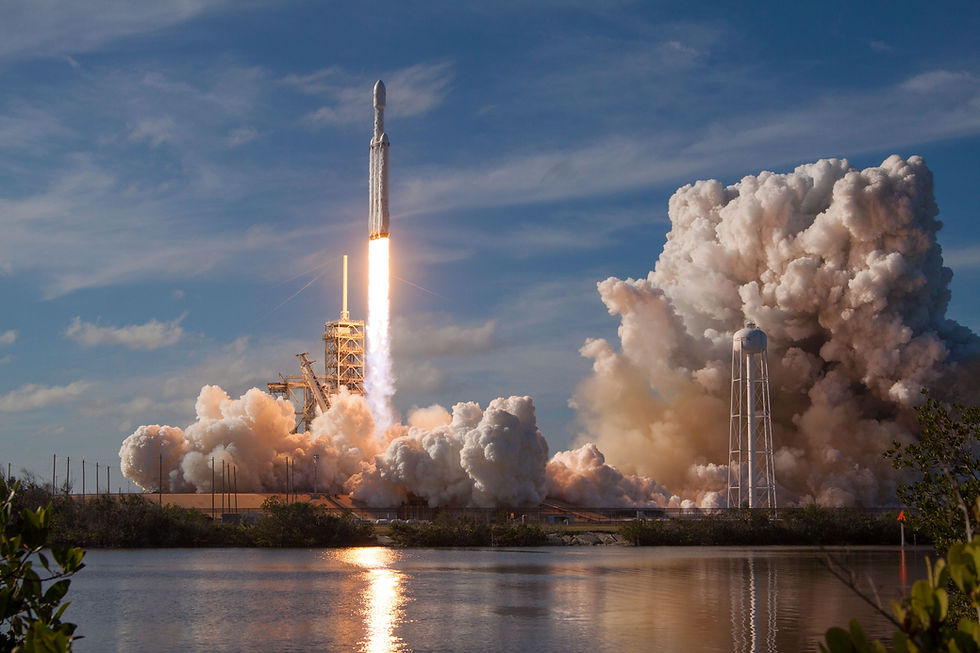
From Vostok-1 to Artemis, space exploration stands as the greatest testament of human curiosity and exploration. Each launch is a triumph of science, i.e. decoding the universe using telescopes, connecting billions using satellites, astronauts inspiring generations, and several other research activities. Yet every ignition also marks an imprint on our atmosphere. The environmental impact of rocket launches is a complex subject that involves comparing global emission scales, analysing high-altitude chemical interactions, and evaluating local ecological disturbances. While the space industry's total CO2 emissions are currently a tiny fraction—less than 0.01%—of those produced by global aviation, rocket exhaust is unique in that it directly injects pollutants into all atmospheric layers.
Atmospheric and Climate Impacts
The most significant concern regarding rocket launches is the release of pollutants into the stratosphere and mesosphere, where they can persist for years.
Ozone Depletion: Solid rocket motors release gaseous hydrogen chloride (HCl) and alumina particles, both of which act as catalysts for ozone destruction. Research indicates that while global stratospheric ozone depletion is currently small (about 0.01%), it can reach up to 0.15% in the upper stratosphere.
Black Carbon (Soot): Hydrocarbon-based fuels like RP-1 (refined kerosene) produce substantial amounts of soot. When injected into the stratosphere, this soot is 500 times more efficient at trapping heat than surface-level sources, potentially altering atmospheric circulation and accelerating ozone depletion.
Shared Pollutants: NOx
It is important to note that all rocket engines produce nitrogen oxides (NOx) regardless of fuel type. This occurs because the exhaust's extreme heat causes atmospheric nitrogen to react with oxygen. Additionally, the high heat generated during the re-entry of spacecraft and debris produces significant thermal NOx, which is responsible for an estimated 51% of total ozone decline attributed to contemporary space activity.
Types of fuel and their impact
Solid Rocket Boosters (SRBs): The "Dirtiest" Propellants
Solid rocket motors are considered the most polluting form of propulsion.
Emissions: They release large quantities of gaseous hydrogen chloride (HCl), particulate aluminium oxide (alumina), black carbon (soot), and nitrogen oxides (NOx).
Impact: Both HCl and alumina are potent ozone-depleting substances. Alumina particles provide a surface for chemical reactions that accelerate ozone loss, and because they are released above the troposphere, they can stay in the atmosphere 100 times longer than ground-level pollutants.
Refined Kerosene (RP-1): High Soot and Warming
RP-1 is a highly refined kerosene popular for its stability and cost.
Emissions: It produces CO2, water vapour, NOx, and substantial amounts of black carbon (soot).
Impact: Black carbon injected into the stratosphere is 500 times more efficient at trapping heat than surface or aviation sources. This soot causes localised warming that can alter atmospheric circulation and further accelerate ozone depletion.
Hypergolic Fuels: Toxic and Carcinogenic
Hypergolics, such as hydrazine or UDMH, ignite spontaneously upon contact and are often used for their reliability.
Emissions: When burnt, they produce CO2, water vapour, and higher levels of NOx than other fuels.
Impact: These fuels are extremely toxic and carcinogenic to humans. Spills or unburnt fuel raining down from spent rocket stages have historically turned launch areas into ecological disaster zones, poisoning soil and groundwater for decades.
Liquid Hydrogen (Hydrolox): The Cleanest Traditional Fuel
Liquid hydrogen is considered the cleanest-burning fuel currently in use.
Emissions: The primary exhaust is water vapour.
Impact: While it is chemically benign, injecting large amounts of water vapor into the dry upper atmosphere can enhance the formation of polar mesospheric clouds, which may influence the Earth's radiative balance.
Methane (Methalox): The Cleaner Modern Alternative
Methane is a newer propellant choice for rockets like SpaceX’s Starship and ULA’s Vulcan.
Emissions: It primarily releases CO2 and water vapour.
Impact: Methane burns more completely than kerosene, producing significantly less soot. If produced using renewable energy via the Sabatier process, methane rockets could potentially become carbon neutral. However, unburned methane is a potent greenhouse gas, being roughly 80 times more warming than CO2 over its lifetime.
Bio-propane and Sustainable Alternatives
Some startups are experimenting with sustainable alternatives to RP-1, such as bio-propane made from waste products.
Impact: These fuels could potentially result in 90% fewer emissions than traditional RP-1 and produce significantly less soot.
Localised Ecological and Physical Effects
Beyond atmospheric chemistry, launches have immediate physical impacts:
· Acoustic Energy: Intense noise pollution and sonic booms can harm local fauna, scatter nesting birds, and cause stress or hearing impairment in animals.
· Acid Rain: Hydrogen chloride from solid exhaust can fall back as hydrochloric acid rain, temporarily acidifying local soil and water.
· Marine Debris: Discarded rocket stages and fairings contribute to oceanic waste, eventually breaking down into metals, plastics, and microplastics.
Comparison between the Apollo (Saturn V) and Artemis missions in terms of pollution
Pollution from Saturn V Launches
1. Fuel and Combustion
First stage (S-IC): Burned kerosene (RP-1) and liquid oxygen.
Produced carbon dioxide (CO₂), water vapour (H₂O), carbon monoxide (CO), and nitrogen oxides (NOₓ).
Released large amounts of soot (black carbon) into the atmosphere.
Second and third stages (S-II, S-IVB): Burned liquid hydrogen and liquid oxygen.
Emissions were mostly water vapour, but at high altitudes, this can disrupt atmospheric chemistry.
2. Emission Scale
A single Saturn V launch consumed about 770,000 litres of kerosene and over 2 million litres of liquid hydrogen.
Estimated emissions per launch:
CO₂: Hundreds of tons.
Water vapour: Thousands of tons, injected directly into the stratosphere.
Soot and NOₓ: Smaller in mass but disproportionately damaging to ozone chemistry
Artemis Rocket Emissions
1. Fuel Types
Solid Rocket Boosters (SRBs): Use ammonium perchlorate composite propellant (APCP).
Produce hydrochloric acid (HCl), aluminium oxide particles, nitrogen oxides (NOₓ), and CO₂.
HCl is highly corrosive and contributes to ozone depletion.
Core Stage (RS-25 engines): Burn liquid hydrogen and liquid oxygen.
Emissions are mostly water vapour, but at high altitudes, this disrupts atmospheric chemistry.
Upper Stage (Interim Cryogenic Propulsion Stage): Also hydrogen/oxygen, adding more water vapour to the stratosphere.
2. Emission Scale
Each Artemis launch consumes millions of litres of liquid hydrogen and oxygen, plus thousands of tons of solid propellant.
Estimated emissions per launch:
CO₂: Hundreds of tons.
Water vapour: Thousands of tons injected directly into the stratosphere.
Hydrochloric acid & aluminium oxide particles: Unique to solid boosters, with strong ozone-depleting potential.
Future Outlook and Regulation
As the launch cadence increases due to satellite internet constellations and space tourism, researchers warn that these impacts will grow exponentially.
A decade of routine space tourism could increase upper stratospheric ozone loss to 0.24%, potentially undermining the recovery achieved by the Montreal Protocol.
To mitigate these effects, the industry is trending toward reusable launch systems, which spread the environmental cost of manufacturing over many flights, and the development of cleaner, sustainable fuels like bio-propane.
While the industry currently remains largely unregulated, experts anticipate that international emissions targets and regulations will eventually be established to manage its fast-growing environmental footprint.


Comments