Where does the Uranium on Earth come from, and why is it so important?

Uranium lies in the actinide series of the periodic table, having an atomic number of 92 and was discovered by the German chemist Martin Heinrich Klaproth in the year 1789 and was named after the planet Uranus. Uranium (U) is perhaps the most studied actinide. It is the heaviest naturally occurring element (isotope U238 is the most abundant), dense and silvery-grey in appearance, known for its strong radioactivity and important role as a nuclear fuel. The oxidation states of uranium range from +3 to +6, and it has a melting point of 1132 degrees Celsius. Similar to other radioactive elements, uranium is found in nature in three distinct "isotopes," U238, U235, and U234, with U238 being the most prevalent. The two isotopes that make up the majority of natural uranium found in the Earth's crust are uranium-238 (U-238), which makes up 99.3%, and uranium-235 (U-235), which makes up roughly 0.7%. The present article discusses the nature of Uranium's occurrence and its source on Earth.

How does Uranium form in the cosmos?
The production of almost half of the heavy elements (heavier than iron), including Uranium, found in nature is due to a specific astrophysical process called the Rapid Neutron-Capture process (r process). The heaviest elements in nature, up to Thorium, Uranium, and beyond, are produced by rapid neutron capture during the stellar explosions. Most of the elements formed in the Universe are produced initially by the production of Hydrogen and Helium in stars through nuclear synthesis. Ordinary stellar fusion cannot create heavy elements like Uranium and Thorium because fusion reactions in stars mainly produce elements up to the iron group, also known as the Iron limit. Rather, uranium was created in settings with very high neutron densities, where neutrons were quickly absorbed by atomic nuclei before they could decay. The conditions that can lead to the stellar formation of Uranium are likely driven by extreme astrophysical events, e.g., the explosions of massive stars (supernovae), neutron star mergers, and hypernovae associated with rapidly rotating stars. Large numbers of neutrons were absorbed by atomic nuclei during these events within milliseconds, producing actinide and transuranic elements, including uranium. The rapid neutron absorption or capturing is called the Rapid Neutron-Capture process (r process) as mentioned above. We therefore know that uranium was there before our solar system formed and that it was created by one or more of these extraordinary cosmic events.
How does the uranium deposit on Earth?
Uranium is older than Earth itself — forged in the violent heart of ancient supernovae, it drifted through clouds of gas and dust for billions of years before that cosmic material collapsed into the solar nebula 4.6 billion years ago, eventually giving rise to our planet. Uranium as an element is found in nearly all major rocks on the Earth, although its concentration is very low (< ppm). The Uranium which we extract for our uses in medical, metallurgical, energy and military purposes is from their ores. So, the uranium as an extractable mineral is deposited as ores which can be associated with all the major rocks, e.g. igneous, metamorphic and sedimentary rocks. There are nearly 200 minerals associated with uranium as a trace element found in it, but the major ores are Uraninite (including pitchblende), Carnotite, Torbernite, Autunite, etc. Uranium ore deposits are associated with variable geological systematics, where the chief process behind their deposition is that it is first leached from the source rocks and then reprecipitated in a favourable geochemical condition, particularly in reducing environments. The major geological Uranium ore deposits are discussed below,
Unconformity-related deposits
These deposits, which have some of the highest amounts of uranium on Earth, were created at the interface between younger overlaying strata and older deformed rocks. They are most frequently found in Australia, Canada, and India, where weathering profiles and fault zones provide the perfect environment for uranium precipitation.
Sandstone and conglomerate deposits
In this kind of deposit, uranium oxides precipitate and form crescent-shaped ore bodies as uranium-bearing groundwater moves through porous sandstone and comes into contact with reducing chemical conditions. Located in Kazakhstan, Niger, Uzbekistan, and the United States, these deposit types are among the most extensively mined.
Breccia pipe deposit
Breccia Pipe Deposits are created when pre-existing rocks collapse or fracture, creating very porous and permeable pipe-like structures that act as natural traps for fluids containing uranium. The United States' Grand Canyon region, Australia, and India are notable locations for these characteristic cylindrical formations.
Volcanic deposits
In these kinds of deposits, hydrothermal fluids carry and deposit uranium minerals along fault, fracture, and shear zones in acidic volcanic rocks. China, Russia, Kazakhstan, Mexico, Namibia, and the United States are all home to these deposits.
Limestone deposits
Limestone deposits are chemically advantageous for uranium concentration because uranium precipitates in very porous and permeable limestone units that are rich in organic carbon. The Todilto Limestone in New Mexico's Grants Mineral Belt is a prominent example of these comparatively uncommon deposits.
Apart from these, there are more minor geological systems associated with Uranium deposits, e.g. vein deposits, tectonic deposits, metasomatic deposits, phosphorite and lignite deposits, etc., but the highest concentration and grade of Uranium deposition is associated with Unconformity-related deposits.
Why is uranium industrially so important?
Uranium plays a vital role in industrial sectors like electricity production, marine propulsion, medical and industrial radiogenic usage and arms and munitions. Globally, roughly ~9 % of total electricity is now generated through nuclear power plants using Uranium. France leads the global platform, where almost ~70 % of its current electricity is produced by nuclear energy. Just 1 kg of uranium can produce as much energy as can be produced using 160 tons of coal, and the best part is that the electricity produced is clean and causes no greenhouse gas emissions. This makes the Uranium so critical in the energy sector. Although U-238 accounts for more than 99 % of the uranium on Earth, for producing electricity, U-235 is required because of its fissile nature. Natural uranium contains about 99.3% uranium-238 and only 0.7% uranium-235, the fissile isotope responsible for sustaining nuclear fission reactions. For most light-water reactors, uranium enrichment is required to increase the U-235 proportion to around 3–5%, allowing the reactor to achieve and maintain criticality efficiently. Apart from the energy industry, uranium has a significant role in the medical industry as a therapeutic medicine. With "targeted alpha therapy," uranium isotopes are employed in cutting-edge cancer therapies where radioactive particles are aimed directly at tumor cells. Researchers have created isotope systems for uranium-230 and thorium-226 that emit many alpha particles, giving cancer cells extremely potent energy while causing the least amount of harm to nearby healthy tissue. Uranium is also helpful in making medical imaging possible. Molybdenum-99, which is produced in research reactors using uranium-235 targets, decays into technetium-99m, a radioisotope utilised in more than 80% of nuclear medicine imaging treatments globally. These radiopharmaceuticals enable early diagnosis of conditions like cancer and heart problems by assisting medical professionals in producing finely detailed images of organs and tissues. Apart from energy generation and medical applications, uranium — particularly depleted uranium (DU) — has several important industrial uses due to its exceptional density and durability. It is widely used as a radiation shielding material in industrial radiography equipment and specialised devices requiring protection from gamma radiation. Due to its exceptionally high density and self-sharpening qualities, depleted uranium (DU), which is mainly made up of uranium-238, is used in military applications. It is frequently utilised in missile components, tank armor, and armor-piercing ammunition, where its capacity to pierce heavy armor makes it extremely efficient in combat. Additionally, DU projectiles ignite when they hit an armored target, making them more devastating. Highly enriched uranium (HEU) is used to power nuclear reactors in aircraft carriers and submarines, making uranium an essential fuel source for military propulsion. Ships may run without refuelling for 25–50 years thanks to these reactors' enormous energy density. Because the fissile isotope uranium-235 may go through a quick, uncontrollable chain reaction that generates a tremendous amount of energy, uranium plays a central role in nuclear weapons. While most nuclear reactors only use 3–5% enrichment, weapons-grade uranium is highly enriched, usually having over 90% U-235. Before uranium's widespread use in peaceful applications like the production of electricity, uranium enrichment technology was primarily driven by the development of nuclear weapons.
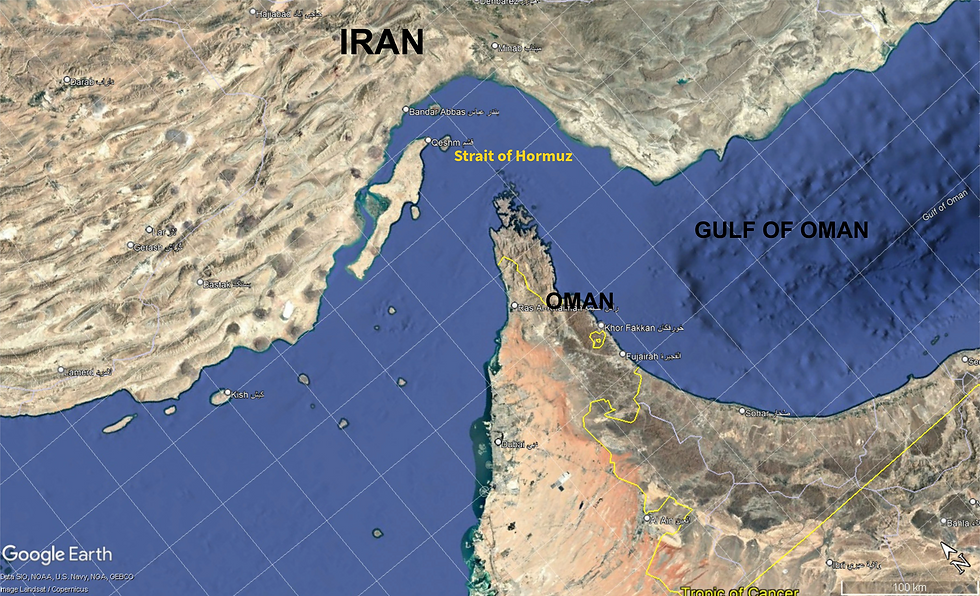
Due to the numerous uses of Uranium in industry, energy, health, and national security, it continues to be one of the most strategically significant elements in the modern world. Uranium has greatly influenced scientific and technical advancement, from enabling industrial advancements and defence systems to powering nuclear reactors and supporting cutting-edge medical treatments. Its position in nuclear weapons, however, emphasises the necessity of international regulation, responsible administration, and peaceful use. As we can see in the ongoing war between the US, Israel, and Iran, uranium becomes the key to the closure of this war. Iran maintains that its uranium activities are meant for peaceful energy and research, but the United States and its allies see Iran's growing nuclear program as a possible route toward nuclear weapons capability. As a result, uranium enrichment has emerged as one of the main issues in U.S.-Iran tensions (17). Uranium will continue to be a vital resource for the future as the need for clean energy and cutting-edge technologies grows worldwide.


Comments